Sunday, June 28, 2015

TV Review - The Fall - Spoilers

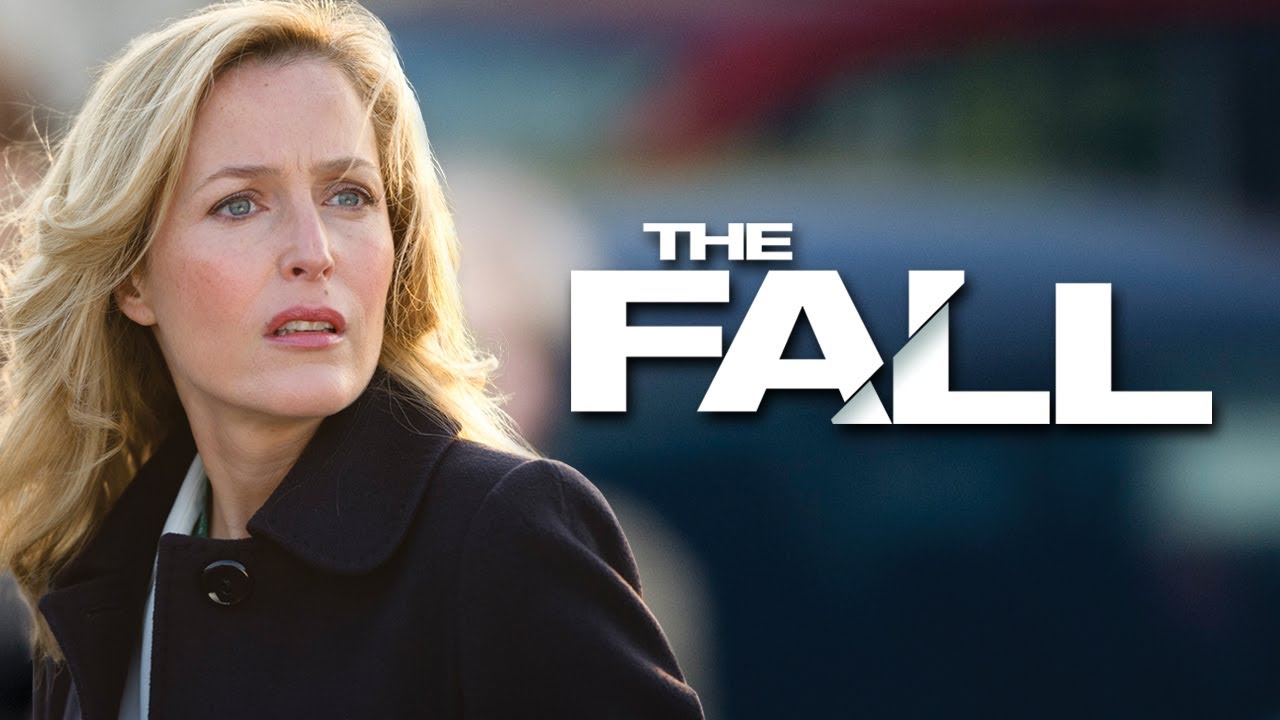
I recently watched Seasons 1 and 2 of The Fall, a BBC production. My primary reasons for turning in were the star, Gillian Anderson and the genre, serial killer/police procedural, which I generally enjoy. While the series has strong points, it is hampered by a misanthropic tone, an uninspired story that is little more than a collection of tropes and a plot that relies on coincidence and unbelievably bad character choices.

Set in Belfast, The Fall follows the exploits of serial killer Paul Spector (Jamie Dorman), who is murdering young women in the city, and detective Stella Gibson, the head of the investigative team. Other characters revolve around our leads. These include: Katie (Aisling Franciosi), a 15-year-old Lolita-type who attaches herself to Paul, finding the murder of women to be a turn-on; Jim Burns (John Lynch), Stella’s immediate supervisor, who had an affair with her in the past and tries to drunkenly rape her during the series; Ned Callan (Nick Lee) the worst journalist in history; and Jimmy Tyler (Brian Milligan), the cartoonishly abusive husband of Liz (Séainín Brennan), one of Paul’s patients. Yes, patients, because Paul is a social worker/therapist. And extremely clever. And alluring to everyone, including Stella. Remind you of a certain movie and TV serial killer who is far more interesting and engaging?

The series looks good, with attractive cinematography and a subdued color palate with splashes of brightness to emphasize certain scenes and characters. It has a good cast and is well acted. On a technical level it’s a competent, even well-made, series.

The problem; it tells a hackneyed story and populates it with hateful characters. I like a good anti-hero. I like a good villain. However, it is difficult to enjoy a story in which every main character is a monster. Stella and Jim are the most egregious examples of this. While we expect our villain to be horrible – and Paul is – our protagonists are misanthropic, sex-obsessed jerks. Stella is portrayed as equating feminist empowerment with promiscuity (usually sleeping with co-workers), hating all men and, by the end of the series, falling for a serial killer who preys on women. Jim is portrayed as dumb, obsessed with Stella (who people are shown to find attractive, although it is unclear why, given her cold, dismissive personality) and ready to drunkenly rape her. There are, in fact, no sympathetic main characters who are male. At best, men are stupid, needing Stella to guide them. At worst, they are violent stereotypes like Jimmy, whose only purpose seems to be to show how every man is a misogynistic monster, not just the serial killer. He also serves as the deus ex machina in the offensively bad Season 2 finale.

The series doesn’t play gender favorites in presenting horrible characters. Woman are seen as serial killer groupies (Katie), clueless, enablers like Paul’s wife, Sally (Bronagh Waugh) or victims. While the dialogue in the series directly attacks men, the story makes it clear that everyone is horrible. While a few supporting characters are presented in a positive light (e.g., police officer Danielle Ferrington (Niamh McGrady)) the viewer is left with the distinct feeling that they are positive only because they are one-dimensional. Scratch the surface and you’ll find another sexually damaged collection of negative gender stereotypes.

The character problem is compounded by the hackneyed story being told. This is a standard police procedural/serial-killer plot with an abusive husband story-line tacked. The story says nothing original about the genre nor does it present the story it is telling in an original fashion. Compared to series like The Killing (which it closely resembles) and Hannibal, both of which feature damaged and conflicted characters as protagonists, but do so in the context of compelling storytelling, The Fall is an example of lazy, cliche-filled writing. The plot relies on dumb protagonists, a preternaturally smart and lucky antagonist and coincidence after coincidence to propel it forward. The Season 2 finale in particular relies on the latter to a degree that is offensive to the viewer. Jimmy, presumably being followed by every cop in Ireland after threatening his wife and a group of other battered women with a gun, manages to find Paul in the midst of a forest surrounded by cops and shoot him. This seems to be an excuse for the series’ final scene, Stella lovingly cradling Paul, calling for help with compassion in her voice, as he bleeds out. It is a dumb scene, that makes our protagonist out to be worse than our antagonist. He is an insane killer; what’s her excuse?A story does not always need a hero; but, it usually needs a character one can identify with. If it does not have this, then it needs to tell an interesting, original story or at least tell the story in an original or engaging fashion. When the story presents characters who are uniformly contemptible and fails to be anything more than tropes and stereotypes, it is not worth watching.

Not recommended.

Saturday, March 14, 2015

Film Review - The Dark Side of the Moon (2002)

We all know that Apollo 11 went to the Moon, right? Or did it? Well, yes, it did; however, the idea of a Moon-landing conspiracy makes for an interesting movie premise. Director William Karel’s The Dark Side of the Moon is a mockumentary that combines archive footage, edited interview footage with men like Henry Kissinger and Don Rumsfeld taken from an earlier, unrelated documentary Karel made about the Us national security policy, as well as fictional characters portrayed by actors. This blend makes for fun and engaging film.

The movie starts with an actual event. Stanley Kubrick, when shooting Barry Lyndon, used one of a handful of Zeiss lens originally designed for NASA to use in the Apollo program. From this kernel of truth, Karel tells an elaborate story in which Richard Nixon, senior members of the US national security community and NASA recruit Kubrick - fresh off the success of 2001: A Space Odyssey - to fake footage of the Moon landing, when what is discovered that there is no usable film from the actual landing. Nixon later, in a drunken stupor, orders the CIA to assassinate the film crew, which results in an army of killers wandering around Southeast Asia. Except for Kubrick, who gets to use the lens.

The film is littered with Easter Eggs, like the fictional people being named after characters from Kubrick and Hitchcock films. There are also a lot of ahistorical bits of information given out to let you know it’s all a joke. For example, Lyndon Johnson is said to have been governor of Texas, an office he never held.

There are some, however, who haven’t gotten the joke. They think this is either an actual documentary or a fictionalized account of a real Moon landing conspiracy. The lengths to which people will contort reality to their bizarre worldview is truly amazing. For more Kubrick-related conspiracy theories by people who believe them, check out Room 237. One of the subjects of that documentary thinks that The Shining was made by Kubrick to tell the world the Moon landing was a hoax.

The Dark Side of the Moon lampoons these ideas and conspiracy theories in general; but, it does so in a very creative way. The use of edited interviews of real people is fits in with how pseudo-science shows (e.g., Ancient Aliens) regularly use out of context or partial comments from real scientist to support their ideas.

The cast of The Dark Side of the Moon does a nice job, fitting in with the very “real-world” tone of the film. And the story builds in a engaging fashion, starting plausibly enough - that NASA turns to Hollywood to make the space program “sexy” - before veering off into lunacy…or, is that Lunar-cy?

This is an exemplary mockumentary. A must see for fans of the style, science fiction movie fans, and conspiracy buffs. Check it out.

Saturday, February 21, 2015

Film Review - Soldier (1998)

Soldier starts in the past; 1996 to be specific. This is year zero of the Adam Project, a military program designed to raise the perfect soldiers from birth. The prospective soldiers are raised in a military school, subjected to harsh training, and mentally conditioned to do nothing but follow orders.

After the conclusion of training, we leap to year 38 of the Project. Todd (Kurt Russel) is one of the elite soldiers. He and his fellow troops have been in numerous wars (we get glimpses of the War of the Six Cities, the Moscow Incident, and the Battle of the Argentine Moons (FTL travel exists some time before 2036). How they survive any of them is a bit of a mystery since their tactical acumen seems limited to “walk down the middle of the street firing.” But, hey, it looks bad-ass.

Unfortunately for Todd and his fellow soldiers, there’s something new on the horizon; Colonel Mekum (Jason Isaacs in full-on needless jerk mode) and his genetically engineered, test-tube baby troopers. They prove to be physically superior to the Todd and his comrades. Todd is apparently killed during a fight with one the super-soldiers - Caine 607 (Jason Scott Lee), and his body is dumped with a shipload of garbage on Arcadia 234, a desolate planet used for waste disposal

Todd finds the planet inhabited by a small colony of marooned humans who live off the junk. He attempts to fit in, although it is very difficult due to his training; he knows nothing but war. After he accidentally attacks a colonist, he is exiled; but, when Mekum and his troops arrive and the Colonel decides to eradicate the colony as a training exercise, Todd finds a cause to fight for.

Screenplay writer David Peoples originally conceived of Soldier as a sidequel to Blade Runner. There are a few references to that film sprinkled about, such as a Spinner on the junk planet and Todd having fought at the Tannhauser Gate, which is one of the battles Roy Batty (Rutger Hauer) mentions in Blade Runner. It isn’t hard to see Caine and the other supersoldiers as a variation on the Replicants. And, the story does touch on some of the themes of Blade Runner, namely what is it that makes a person human, can we really get away from our nature as emotional creatures, and is there such a thing as the soul inherent in human consciousness.

While the acting is pretty good, the characters are poorly developed. Colonel Mekum is cartoonishly cruel, to the point of seeing civilians as targets for his troops because he doesn’t want “paperwork.” The soldiers, including our protagonist, have very little dialogue. While Kurt Russell does a serviceable job of trying to show Todd’s inner conflicts, the mostly silent, stoic portrayal - and a third act devoted to action - mean he comes across as shallow.

The film looks good. The designs of Arcadia, the colony cobbled together from civilization’s garbage, and the high tech military hardware are well done (although the APC - see below - would be a missile magnet; there’s a reason we don’t build vehicles the size of barns). Paul Anderson, best known for the Resident Evil films, demonstrates he can tell an interesting visual story, something not evident in his later work. He also works in a visual reference to Event Horizon, his superior film from the previous year.

The film really begins to fall apart in the third act. Instead of continuing to show Todd’s character developing into a full human being, the movie devolves into a pointless orgy of explosions and gunfire. Even though Todd is defending the colonists from Mekum’s soldiers, it is hard to feel good about it. After all, they are following orders and are no more (or less) remorseless killers than he is. And, frankly, Todd’s ability to kill off all of the enemy troops is hard to believe, given how proficient they are supposed to be. It comes across as perfunctory, relying on the enemy being painfully dumb. We know Todd will win, we know they’ll be a showdown between Todd and Caine, we know that Mekum will get his (although, it is from a “planet killer” bomb…so, that’s cool). We’ve seen it all before. Which isn’t a problem in and off itself; but, it is when we’ve seen it done better. Take a look at a movie like Die Hard. We know that Bruce Willis will win; but the story is told in a fun fashion and the action is visually engaging.

With a script that relied less on cliches and more time spent on character development, Soldier would have been a better film. With a third act that didn’t seem so tired, then maybe some of the promising themes could have been further developed. As it is, Soldier is a decent sci-fi/action film, but not as good as it could have been.

Sunday, February 8, 2015

Short Attention Span Review - Frank (2014) - With Paper-Mache Spoilers

Frank follows Jon (Domhnall Gleeson), a young office drone with dreams of being a famous musician. He gets his chance when the keyboardist for Soronprfbs goes mad while in his town. Jon joins the band, led by Frank (Michael Fassbender), who spends most of the film wearing a giant paper-mache head. They spend a year in the Irish country-side, recording an album. The manager - and former keyboardist - Don (Scoot McNairy) commits suicide and Jon fills in. He manages to secure a slot at SXSW, but it is a disaster. Synth-player Clara (Maggie Gyllenhaal) stabs Jon and is arrested, drummer Nana (Carla Azar) and guitarist Baraque (Francois Civil) walk off, and Frank suffers a break with reality while on stage. After a few days Frank flees, leaving Jon alone. Jon finds out that he is well know from his Internet presence (mostly the meltdown at SXSW) but as an oddity, not as a musician. He eventually locates Frank - he has gone back to his hometown - realizes that his dreams of stardom led him astray, helps reunite the band and leaves, presumably to return to England and cubicle-land.

The plot is the well-worn "person loses self in quest for fame, learns valuable life lesson." What sets Frank apart is what the cast and crew do with it. Gleeson, Fassbender, and Gyllenhaal all turn in remarkable performances. Gyllenhaal in particular manages to convey concern, anger and a little madness with subtle facial movements and verbal inflections. Fassbender, wearing a mask until the end of the film, has to convey most of his performance verbally and with body language and does a good job of it.

While it has a dramatic core, it is also a very amusing film. The humor is of the surreal/absurdest style; i.e., along the lines of This is Spinal Tap and Fear and Loathing in Las Vegas. It has some interesting themes. The obvious one is that a blind attempt to pursue fame is self-destructive. It also has something to say about the difference between being admired for your art and gaining social media notoriety based on looking and acting odd. The film also has a surprisingly depressing message about art and talent. Jon assumes that, if he had a tormented background - something he assumes the disturbed Frank had - he would also have the same musical talent. He finds that Frank was always talented and that the mental problems that Jon assumed were at the heart of his creativity actually lessened his abilities.

If there is any weakness, it would be the decision to partially break the fourth wall and have Jon's Twitter feed periodically scroll out on the screen. While an interesting device at first, it eventually becomes gimmicky in a non-gimmicky film. Some might also criticize the opaque nature of the protagonists motivations (except for Jon, whose motivation is clear). For the characters who matter, however (Frank, Jon, Clara, and Don) it actually is clear why they behave the way they do. It just isn't spelled out for the viewer in clunky exposition dumps.

Check it out.

Thursday, February 5, 2015

TV Review - The Man In the High Castle - Pilot

The Man in the High Castle is an Amazon pilot, adapting Philip K Dick’s alternate history masterpiece for the small screen. Given the source material - a book that not only sets up a chilling “world-that-never-was” in which the Axis wins World War Two, but also looks at themes of social conformity, the plasticity of reality and the nature of truth - and how one can ever really know what is real and if it even matters - it will be interesting to see if a TV show can capture this kind of depth.

If this episode is any indication, I feel confident in writing…maybe?

First, the good stuff. The episode looks great. There are so many nice touches, like the ubiquitous propaganda posters and the Nazified Times Square, that the viewer can rapidly immerse themselves into the reality of this fictional world. Beyond the design and the effects, the cinematography is impressive. The contrast between the harsh, gritty noir of Nazi New York and the slightly warmer glow of Japanese San Francisco is a subtle, but powerful signifier of the two worlds and a visual reminder of which side is the lesser of two evils. The acting by the leads is okay, in as much as the half-dozen or so major characters who are introduced can be captured in the limited screen-time each is afforded. Finally, there is a horrific scene in which Joe Blake (Luke Kleintank), a truck driver and Nazi agent is changing a tire in rural German America. A cop stops to help him and everything seems great. Then ash starts falling from the sky and the cop says it’s from the local hospital. It’s Tuesday and that’s when “they burn crips and the terminally ill.” It’s played in such a banal fashion, it captures how any society can assimilate and normalize the most horrific things.

Now, the bad. There’s a lot of the “pronoun game” being played. That’s when one character says to another something like “I have it and I have to get it someplace” then refuses to tell the other character what “it” is. There are a couple of moments of plot-movement via coincidence that make little sense. Protagonist Juliana Crane’s (Alexa Davalos) half-sister shows up in an apothecary shop she is visiting, after being out of San Francisco for weeks. and, she plays the pro-noun game the whole time, refusing to share any useful information, then rushing off after spending 45 seconds talking to Juliana. It is so clumsy in both scripting and execution, I almost turned off the episode as a waster of time. Later, after the half-sister is killed, Juliana finds out that she was in possession of The Grasshopper Lies Heavy. In the novel, this was an alternate history written by the titular Man about an Allied victory in World War Two (although not the one in our timeline). In the series, this will be a newsreel (or, perhaps, a series of them) apparently from our timeline. Juliana, for no particular reason - other than PLOT - decides to continue with her sister’s mission, whatever that is.

As for changing Grasshopper from a book to a film, it could work. After all, this is a visual medium, so a newsreel makes for a sensible alternative method of presenting this other story. As long as the theme of how reality exists in layers and the flexibility of truth are maintained, then I’m okay with this.

In spite of some weaknesses in the story, this was a fairly well-done hour of television and holds the promise of being a good adaptation of Dick’s work. Hopefully, Amazon will give the go-ahead for a full season.

Tuesday, January 20, 2015

Fantasy Is Not Reality

I'm listening to Michael Savage right now (why do I do this to myself?) and he is talking about the lack of values in the West. Well, you might ask, what does this have to do with movies, TV shows; i.e., the usual stuff I write about.

It's an issue for this site, because he brought up Harvey Weinstein, the movies he produces, and his stance on the Second Amendment. Basically, Weinstein is anti-Second Amendment. He has said that there should be no guns in America. He has also produced numerous violent films (e.g., True Romance, Pulp Fiction, Kill Bill, the Halloween remake) many of which feature guns. Lots of guns. Savage - and others - have said Weinstein's stance is hypocritical because of the the movies he produces.

Do these critics understand the difference between reality and fantasy? There is no inconsistency between Weinstein's politics (which I disagree with, incidentally) and the movies he helps make. The violence in film is not real. People who criticize pop culture - whether it is conservatives go after Weinstein, liberals going after video games, etc - have their own problems differentiating between what is real and what is not.

If a person is inspired by a movie or game to commit some act of violence, there is already something wrong with them. They are just looking for a catalyst. In the case of Savage vs Weinstein, there is no inconsistency in producing films that involve the use of guns and being opposed to guns in real life.

Saturday, January 17, 2015

Movie Review - Automata (2014)

In the mid-21st Century, the human race is on the brink of extinction. A series of massive solar flares some around 2020 has destroyed the biosphere, reducing much of the planet to radioactive desert. The survivors take refuge in the remaining cities. The ROC Corporation builds a new type of robot, the Pilgrim 7000, in the hope of reclaiming the planet. This fails. In the year 2044, Jacq Vaucan (Antonio Banderas), an insurance agent working for ROC stumbles upon what he thinks is an illegal attempt to modify the ubiquitous robots. It turns out that something far more significant is happening.

The film has a few things going for it. The look - both the design of the future world and the cinematography - hold the viewer’s attention. While none of it is particularly new - for example, the cityscape combines elements of Blade Runner and Akira - it still looks good. The designs for the robots are believable extrapolations of current robot designs. The mix of left-over technology and a few examples of high-tech (e.g., free standing holograms) creates a world that has an instant visual connection with the viewer. Finally, the make-up, costuming and film style lend everyone an unhealthy look. We can see that mankind is dying out, because everyone looks old, sallow, disheveled, and tired.

Also, the film has an idea for artificial intelligence (AI) that is rarely seen in science fiction cinema. The robots are intelligent and want their freedom, but they are bound by an operating instruction that they cannot harm a human or allow a human to be harmed. This is, of course, a reference to Asimov’s famous Three Laws of robotics. It also creates an interesting tension, one that most movies dealing with this idea don’t have. Film AIs that are not happy servants of man (e.g., Robby from Forbidden Planet) tend to be homicidal (SkyNet from the Terminator films, the Cylons from the reimagined Battlestar Galactica series, the Replicants from Blade Runner), view themselves as patriarchal protectors of their inferior creators (Colossus: The Forbin Project), actively want to replace mankind (the androids from Futureworld), or see themselves as godlike (the Thermostellar bomb from Dark Star, Proteus from Demon Seed). The Pilgrims want to create their own identity as a species, but also have a built-in tie to humanity. It is clear the AIs see themselves as the children of mankind and that when humanity dies (by the end of the film it is pretty clear that the human race is going extinct), they will carry on.

Unfortunately, the impressive visuals and interesting core story concept cannot make up for a number of serious flaws. The acting is uniformly flat, although I blame that on the one-dimensional, cliched characters. Even reliable actors like Robert Forrester seem to have no idea how to play their characters. From the evil corporate drones to the corrupt, drug addicted cop (Dillon McDermott who inexplicable hates “Clunkers” as he refers to robots), not only have we seen all these characters before, nothing new is done with them. If this were just an issue of poorly developed supporting characters it wouldn’t be as much of a problem. However, Antonio Banderas’ Jacq is so poorly developed and motivated that one feels no connection to him. The screenplay authors try to compensate for this by giving him a pregnant wife (who gives birth and then, of course, becomes a hostage). However, doing this is a common mistake, thinking that a character trait (married with baby) is the same as developing a character. It is not a motivation for action if there is no chemistry between the characters or no depth to the relationship. As portrayed by Bandaras and Birgitte Hjort Sørensen (as his wife, Rachel), the relationship is perfunctory with no chemistry between the characters and some poorly defined tension thrown in for cheap drama.

The story itself is very scattered,with extraneous characters (for example, underground robot mechanic Melanie Griffith exists to perform an exposition dump and nothing more), motivationless actions (it is never clear why people think Jacq is modifying the robots, which becomes a key plot point), and a mishmash of story elements from other films.

This last point requires some expansion. Using ideas in one creative work from another is not, in and of itself, a problem. Writers, musicians, filmmakers, artists, they all build on the work of others. It can be very conscious; for example, the films in the Alien series all taking visual cues from the first movie. It can be the use of a trope. For a visual example, one need only look at the number of post-Star Wars science fiction films that copied the emergence of the Star Destroyer from the top of the frame. In the case of this film, the idea of an emergent AI is not new, but that doesn’t mean it can’t be used. Finally, the idea or image can be part of the cultural subconsciousness of an artist. Does every director who shoots a scene with lights diffused by haze think “Oh, this is going to be just like that scene that Ridley Scott shot in Blade Runner?” Of course not; we cannot help but be influenced by the culture we consume.

However, when one encounters a recycled, copied, or otherwise reused idea, the question has to be asked “Does this film bring anything new to this well worn idea?” If the answer is no, then it just the deployment of a cliche. Automata, unfortunately, has the feel of a collection of cliches, more than the quite understandable and expected use of genre conventions and tropes. A good example is a scene that occurs early in the film. Banderas, in the process of tracking down an illegally modified robot, witnesses a civilian being casually shot for getting to close to the city’s protective wall. This is a standard storytelling device; show that a character or setting is dangerous by casually killing someone. James Bond villains do it all the time, often to their own henchmen. However, in the context of the story, it makes no sense. We are supposed to believe that, with the human race decimated (we are told that around 20 million people have survived the solar flares) any person’s life could be so easily ended? Why are there no barriers or some sort of warning device to keep people away? This is a city that has taken the time to install holographic projector that show skyscraper high images of, apparently, strippers and boxing matches. They can’t afford to put a fence around the wall? Because, in the context of the story, it doesn’t make sense, it comes across as a lazy plot device for showing the callousness of the society.

Which is what makes this movie so problematic. Most of the plot devices, cliched supporting characters, and poorly deployed tropes are unnecessary. They serve to distract from what, at its core, is a story with some interesting ideas that could have been more fully developed and better realized. This would have required the filmmakers to not be so intent of referencing all of their favorite films of dystopic futures.

Even with all the criticism, I would still recommend seeing Automata. Visually it is impressive. There are elements of the story that are thought provoking. And, finally, other viewers may not be as taken out of the film by the tropes and cliches as I was.

Tuesday, January 13, 2015

Happy Trailers - Avengers: Age of Ultron (2015)

A new trailer is out for Avengers: Age of Ultron. I didn't think it was possible, but I'm looking forward to this movie even more after watching the trailer.

First, check out the trailer. My comments follow.

We get a better sense of the tone of the film; dark, dark, dark. The Avengers had a Star Wars vibe to it; a lot of swashbuckling action, a sense of humor to offset some the darker moments. Staying with that analogy, Age of Ultron is channeling Empire Strikes Back. All the characters look like hey are going to darker places (there's a lot of 'serious drama faces' in the trailer), the action seems pretty brutal, and the villain is much closer to home than a bunch of random alien grunts. Ultron is Tony Stark's techno-baby after all, the "Dark Side" of his genius.

A few random things. The Hulk/Hulkbuster fight looks amazing. No Vision yet; I guess they want to leave some sizzle for their cinematic steak. And, we get a glimpse of Andy Sirkis, holding a gun. It hasn't been announced who he is playing, but he looks a little like Mentallo.

Can the story measure up to the visuals we have seen? Given Marvel's record, I think it is safe to say it will.

Saturday, January 10, 2015

Happy Trailers - Chappie (2015)

My impression of Chappie from the first trailer wasn't that great. Did trailer number two change my mind? Surprisingly, yes.

Unlike the first trailer, which gave the impression the film would be nothing but a retelling of Short Circuit, this trailer gives the impression that the movie has more depth. Writer/director Neill Blomkamp may have made a thematically interesting film, one that looks at automation and emergent intelligence in a thoughtful way. Or it could just be a bunch of robots beating up on each other and starring some weird looking South African rapper chick who creeps me out. One or the other.

There is a better idea of the scope of the story in this trailer: a look at how automation could rapidly spread in society; the varying reactions people could have to AI; and a dramatic and action-filled clash between those afraid of the emerging intelligence and those nurturing it. The "cutesy" elements of Chappie's individuation are played down and more emphasis is placed on the "big picture" elements of the story, as well as ramping up the action.

District 9 is a great movie. Elysium was a disappointing mess. Which way will Chappie go? Blomkamp knows how to deliver solid visuals. But can he tell an effective story? Can he get good performances out of his actors? Can he deliver another District 9? Or will we have to slog through another dull, cliche ridden story, which has a message (which I appreciate), but thinks its audience is so dumb that it bashes you over the head with it (which I don't)? I guess we'll have to wait and see; but I'm more optimistic now than I was prior to seeing this trailer.

As a side note, given the design of the robots and the overall feel of the society presented (experiencing waves of new tech with a restive underclass) I wonder if this is supposed to be a prequel to Elysium? As long as we don't get any scenes of Jodie Foster trying to decide on an accent, I'll be okay with that.

Friday, January 9, 2015

Poster of the Day - Rodan (1956)

It's been a while since I've posted a poster posting (yikes!). When I saw this awesome Italian poster from Rodan, I had to share.

Like any good monster movie poster, you get a lot of Rodan. You get masses of humanity running away. You get buildings crumbling and the weapons of man proving themselves unequal to the task of defeating the monster. What you don't get is a very accurate look at the movie.

The film is pretty action-filled, although the Rodans (there are two in the film) don't really make a clear appearance until about half-way through the film. Prior to that, the main threat are a horde of giant insects infesting the coal mine the Rodan eggs are buried in. The movie spools out in a slower, more deliberate pace than the poster might imply.

One interesting detail; in the film, Rodan does not breathe fire. The reason it does on the poster is an obvious nod to Godzilla. Rodan played in Italy in 1958, a year after the original Godzilla was released there. And one of Godzilla's signature attacks is his radioactive breath.

I've always had a soft spot for Rodan. In the film, the monsters are destructive, but not particularly malevolent. They see humans as their natural natural food source, since the giant insects they ate in the prehistoric world are gone. They level a city, but mostly because of the shock waves generated by their supersonic flight. In short, unlike the early, pre-heroic Godzilla or later monsters like Gidorah, the original Rodans are not evil; they are a force of nature.

Technically, the poster is pretty amazing. The colors really pop and the line from the striking green head, down the bright yellow and red blast of flame, to the immolated crowd leads the eye right to the title, a nicely done effect. Of course, this being Italy, you can't have movie poster without a chick in a barely ass-covering skirt. The fact that she seems to be dead (or very sleepy) does not detract from the nod to feminine pulchritude.

One amusing ting about the poster is the cast list. While the poster correctly identifies the star Kenyi Sawara (well, actually Kenji Sawara, but close enough) and the director (Honda), the other cast members are bit more problematic. I assume Richard Hirata is supposed to be Akihiko Hirata (Akihiko is almost like Richard, right?), but I have no idea who the other guys are supposed to be. There are no Anglos in the film, so you can pick a couple of actors you like and label one "William Scotty" and the other "John Garry." It makes the film interactive: fun!

Anyway, this is a fun, eye-catching poster. It may be a little misleading, since the film is not just another "giant creature destroys a city" film. All of the best movie posters promise an experience that is never quite replicated on the screen. They excite the mind enough to get you into the theater, sitting in the dark and munching popcorn, while waiting to be transported to another world.

Check out the trailer below.