
Wednesday, September 16, 2015
New Issue Of Far Horizons
The new issue of Far Horizons is out. It's free, has some awesome short stories and articles, including a film review (Phase IV) and short story by your humble narrator. Check it out by going here.

Tuesday, September 8, 2015
Film Review - Phase IV (1974) - Spoilers
Phase IV (1974)
How would mankind interact with, or even recognize, an alien intelligence? Would our effort to understand them lead to peaceful contact? Are confrontation and conflict inevitable? These are some of the central questions raised by Phase IV. The film is the only feature-length directorial effort by Saul Bass, a graphic artist who is best known for his design work on title sequences for numerous films, including Psycho, Spartacus and Alien. He turned his keen visual sense to telling a thematically complex film through innovative and provocative imagery.
“That spring we were all watching the events in space and all wondering what the final effect would be. Astronomers argued over theory, while engineers got pretty excited about variables in magnetic fields. Mystics predicted earthquakes and the end of life as we knew it. When the effect came, it was almost unnoticed because it happened to such a small and insignificant form of life.” - Opening Narration by Jim Lesko (Michael Murphy)
A mysterious cosmic phenomenon is detected. Its effect is to cause ants to form a group intelligence in a remote area of Arizona. The changes in behavior are noticed by biologist Ernest Hubbs (Nigel Davenport) who persuades the government to set up a small, high-technology research station to determine what is happening and how to cope with the potential “biological imbalance.” With him is computer scientist/linguist Jim Lesko. After a few weeks of observation and under pressure to get results or shut down the project, Hubbs destroys a number of massive towers built by the ants. This precipitates a back and forth struggle between man and ant. The two men are joined by Kendra (Lynne Frederick), the only survivor of a small farm family that is accidentally killed when they are caught in a cloud of pesticides. The humans find themselves increasingly unable to cope with the ants, who prove to be potentially more intelligent than mankind. In the end, Hubbs is killed by the ants, Kendra has been absorbed into the hive mind, and Lesko appears to have accepted that a new hybrid society is the inevitable outcome, one that will see mankind in a subordinate role to the new rulers of the Earth, the meekest of the meek.
“We are faced with a power that has appeared and is exerting itself. We have the opportunity to study it, to learn from it, to teach it its limitations. We can, in a word, educate it. ” - Ernest Hubbs
Phase IV was released in the midst of a wave of ‘revenge of nature’ films. The Seventies saw the rapid growth of the environmentalist movement, as people began to become fully aware of the cost of modern civilization. It also reflected a growing disillusionment with the hubristic view of mankind at the top of the food chain, a species apart from nature. Movies as varied as Frogs (1972), Night of the Lepus (1972), Jaws (1975), Bug (1975), Food of the Gods (1976), and Prophecy (1979) all showed mankind being assaulted by the natural world. In many of these films, humanity’s abuse of nature is a causal agent for the calamities that befall him. In others, mankind finds that for all his technology and intelligence, he is still at the mercy of natural, red in tooth and claw.
In Phase IV, the human race is confronted with an intelligence every bit as complex and capable as its own. How this new form of intelligence arose isn’t clear. There is some evidence that the ants have achieved a hive mind due to an extraterrestrial intelligence coming to Earth. However, it is just as valid to interpret the plot as charting the rise of an intelligence in response to mankind’s treatment of the world. It is no accident that the film is set in an abandoned housing development in the middle of the desert, an attempt to impose one kind of ecosystem into an area unsuited for it.
“Human beings can exist in temperatures of 120 degrees or higher, but our computer shuts down at 90.” - Ernest Hubbs
All of mankind’s technology is shown to be vulnerable to the ant’s harnessing of more ‘natural’ forces. The ants overcome the high-tech devices in the research station by using their bodies to short out critical machinery and constructing reflective towers around the lab, focusing the rays of the desert sun on the building. They become immune to the pesticides Hubbs uses against them by changing their genetic structure. Mankind's reliance on complex and fragile technology becomes a weakness the ants exploit.
What mankind’s technology does enable is for Lesko to learn the language of the ants and open up an interspecies dialogue. This leads to the conclusion that the ants have been observing and experimenting on the scientists, just as the scientist have been observing them. However, while Hubbs, representing a brute-force materialistic view of the world, uses various forms of coercion to try and teach the hive mind its limitations, the ants have a larger goal in mind—the merging of the two species. Kendra is eventually absorbed into the hive mind, becoming a human ‘queen’ and mating with Lesko. In a scene cut from the theatrical release, the film ends with a glimpse of the future. There is a hybrid society, one of stark geometric structures, humans living in a fashion reminiscent of how we’ve seen the intelligent ants living, using unfathomable technology, perhaps to create an artificial version of the hive mind and, finally, images that could be interpreted as showing a transcendent state for mankind. This is Saul Bass’s preferred ending1; the theatrical release ends with Kendra emerging from the sand inside of a giant anthill and embracing Lesko, some abstract imagery and Lesko saying, “We knew then, we were being changed and made part of their world. We didn’t know for what purpose, but we knew we would be told.”
While it would be inaccurate to say the film is purely an example of visual storytelling—important information is conveyed by the dialogue between Davenport and Murphy—there are long sequences detailing the actions of the ant society that are backed up only by the discordant soundtrack. It is one of cinema’s most ambitious attempts to build an alien culture based solely on images and actions. Ken Middleham provided the spectacular insect photography2. The viewer is given a sense of how the ant society works, how they are organized, and even how they mourn their dead. The work by Bass and Director of Photography Dick Bush (Tommy, Crimes of Passion) is also noteworthy, capturing the claustrophobic confines of the research station and paralleling it with the tunnels and chambers of the ant colony.
The film benefits from the performances of Davenport and Murphy. Davenport ably conveys the monomaniacal Hubbs as he slips from a rational concern over what the growing ant intelligence represents to an obsession with “teaching” them their limits and the supremacy of the human intellect. Murphy is a nice compliment to Davenport’s intense performance, portraying Lesko as having a healthy balance between curiosity over the ants and a concern for his safety, as well as that of Kendra and Hubbs. He clearly sees that confrontation won’t work; only by communicating with the ants can some kind of understanding be reached.
“They’re not individuals, they’re individual cells, tiny functioning parts of the whole. Think of the society…with perfect harmony, perfect altruism and self-sacrifice.” - Ernest Hubbs
The film does have problems. While elements of the plot—like the exact nature of the emerging intelligence—can remain opaque without harming the story, other elements are legitimately holes. It is unclear why Hubbs, who has sufficient evidence of what mankind is facing early on, refuses to contact the outside world and alert them to the danger. He is presented as switching from rational to obsessed with little transition. It is never made clear how the ants know which pieces of equipment to sabotage (a point brought up in the dialogue); while this lends some credence to the idea that the ants have been taken over by an extraterrestrial intelligence, it is never made clear that this is the case. And the finale, whether the one from the theatrical release or Bass’s original ending, doesn’t make much sense. While it is clear what it is happening—Kendra and Jim have become part of the hive mind—it is not clear how this is taking place. Kendra emerges from the sand, hugs Jim, and he gives his last line, and either the film ends or, in the original ending, plays out for a few more minutes with a lot of interesting images, none of which are explained. It’s basically a less comprehensible version of the end of 2001: A Space Odyssey.
While both Davenport and Murphy are good in their roles, Frederick is not. She is a consistently weak and impassive actress (see No Blade of Grass and Vampire Circus for more examples of her aggressive blandness) whose one facial expression seems to indicate constant boredom. It doesn’t help that she serves more as plot point than as a character. It is clear that little thought was given to developing her.
Phase IV is not a perfect film. What it gets right, however, far outweighs what it gets wrong. The portrayal of a truly inhuman intelligence, the documentary feel of the attempt to communicate, the beautiful visuals and the thoughtful look at how mankind would react to superior intelligence makes this film worth seeking out.
Recommended.
Notes
1. A clip of the original ending can be found on my YouTube channel.
2. Cinefex, Issue 3 from December, 1980 has an in-depth interview with Ken Middleham about the making of the film’s microphotography. For anyone with an interest in visual effects or cinematography, it is worth tracking down the issue.
Friday, September 4, 2015
Film Review - Spring (2014) - Spoilers
Spring is a great movie. It is blessed with actual on-screen chemistry between the leads, Lou Taylor Pucci and the luminous Nadia Hilker. It has a story that is genuinely creepy, at least until the end when there is a bit too much exposition about what the not-quite-human Louise (Hilker) is going through. The effects are good, if at times a bit cartoonish. The cinematography is clean and attractive and the script is well written. Add to this a well-essayed meet-cute style romance and you have an engaging and unique horror film.
"I'd still like to grab coffee or something, sometime. Because I think you're the most attractive person I've ever seen. But that doesn't outweigh that you might be a mental patient and I gotta make sure that you're the kind of crazy I can deal with." - Evan
Evan (Pucci) is a mid-twenty-something that life has handed one disaster after another. The opening scene sees him at his mother's deathbed, as she wastes away from cancer. It is later revealed that his father died a few years earlier from heart failure and that Even had to leave college to take care of his mom. On the night of her funeral, he gets into a fight in the bar he works at and is fired. The guy he beat up files charges and the police are after Evan. He leaves the US, picking Italy at random. He winds up at a sea-side town, Polignano a Mare, where he catches the eye of Louise. After some flirtation, the two form a quick and intimate bond. However, Louise is not what she seems. Evan discovers she has a horrific secret. Will love win out in the end?
"I am not a sociopath, okay? I just have really bad luck." - Louise
Spring takes some of the tropes of the star-crossed lovers/meet-cute instant romance and gives them a nice twist. The girl has secret, but it's not that she used to be fat or is really a secretary and not a princess or has a controlling family; it's that she is an immortal mutant, whose genetic code runs riot every couple of decades and she spawns teeth and tentacles. Evan is a little closer to a stereotype; however, Pucci makes him very appealing. It was a good idea to have him spend some screen-time first with his drunk, druggie friend Tommy (Jeremy Gardner) and then, when he gets to Italy, two English versions of Tommy and then juxtaposes those relationships with that of an elderly farmer, Angelo (Francesco Carnelutti), who hires Evan as a farmhand when he arrives in Polignano. We get to see the effects that life's challenges have had on Evan when he's with the "lads," but also his more inquisitive, sensitive side when he is with Angelo, without his character ever slipping into some unrealistic sappiness.
The film looks beautiful. The moment when Evan and Louise first see each other in the tight confines of the town square is masterful. Shot in slow motion, with Louise in a seductive red dress and Evan emerging from shadows into sunlight as he turns to watch he walk away sets the stage for the relationship to come. Dream-like, hinting at the flirtatious and difficult nature of Louise (after all, she makes eye contact and then walks away from him) and sets her up as something of a predator. The early creature scenes are effective, although the limits of the CG show near the end, when we see a bit too much of Louise transformed into some kind of fish/squid.
As a Lovecraft fan, I also appreciated the nods to his work (and the work of subsequent authors in the Cthulhu-mythos). Louise is kind of a hot shuggoth or an offspring Ubbo-Sathla. If you don't know what that is, don't worry; it just means you're not an ubergeek like me. The idea of an inbred and not quite human population is something shows up time and again in Lovecraftian stories. And the visual tone, at least initially, would fit a mythos story with partially glimpsed weirdness and visual tone that instills a sense of unease in the viewer.
There are problems with the film. It goes a little longer than the story warranted. The last act, which is heavy on unnecessary backstory, could have been tightened up. The over-explanation of Louise's power actually makes it more confusing. Why is she sprouting tentacles at one point and wolf-like features at another? Is Louise (and others like her) the source of our mythology of werewolves, vampires, succubi, etc? Why does she sometimes look like a rotting corpse? Why even bother with the nonsensical exposition about embryonic and adult stem cells? None of this last minute exposition ruins the film; but it is unnecessary and needlessly complicates the dark fairy tale tone the film established. There's also a last minute red herring - Evan is suddenly being pursued by the police for a visa violation - that goes no where. And ending, in which Louise chooses Evan over immortality, is never in doubt.
These problems are minor compared to everything the creative team did right. Spring is a great film and one that any fan of horror films or even off-beat romances needs to see.
Highly recommended.
Film Review - Creep (2014) - Spoilers
Creep. Is it a tired collection of jump scares, amateurish and telegraphed plot twists, horror genre clichés and one of the dumbest protagonists in film history, all tied up in dull, found footage bow? Or is it a sly send-up of all those things, a knowing look at the tropes of the slasher genre and found footage visual style? Depending on which question you answer 'yes' might determine whether you like this 78 minute long film or whether it is a waste of your time.
Aaron (Patrick Brice) is a videographer who answers an advert from Josef (Mark Duplass). Josef says he has terminal cancer and wants to create a movie for his unborn son. Josef starts out as a weirdo and only gets worse as the story progresses. Aaron sticks around, even after Josef confesses some disturbing facts about his life. After a full day of odd behavior, Aaron has had enough and manages to get away from Josef, who has been successfully getting Aaron to stay longer and longer at the cabin. Aaron thinks he has gotten away; but Josef, who says he loves Aaron tracks him down to his home and sends him disturbing DVDs and gifts. Finally, Josef asks Aaron to meet him one last time for "closure." Will Aaron rid himself of this "creep?"
Josef is disturbing from almost the first moment Aaron meets him. His idea of fun is to leap out at Aaron from a concealed location, providing the film with literal jump-scares. His first "scene" for his son is of him taking a bath with an imaginary toddler. He starts to refer to Aaron as his best friend and says that he loves him. Through all of this, Josef continues to hang around. Why? Because he's the victim, of course.
There are some good aspects to the film. Duplass is a pretty good actor and gets into the role of Josef. Although the pace is slow, at 78 minutes the film doesn't go on too long. While the only "frightening" parts are the jump scares, a lampshade is hung on them. Josef literally says he likes to jump at people to startle them, the essence of the jump scare.
Everything else is kind of a mess. While the found footage aspect fits into the story, it doesn't add anything. It looks like another filmmaker decided to cut costs and use the found footage style to provide cover for bad cinematography and a low-budget. The finale requires Aaron to behave in a way that no human being actually would, going to meet the clearly disturbed (and dangerous) Josef. Of course, he pays for it, in standard horror movie fashion.
Ultimately, the film has nothing new to offer to the slasher or thriller genres. Aaron is too dumb to sympathize with and Josef so weird that the final reveal doesn't make much sense. Josef is a serial killer and apparently has dozens of victims. But, it he follows the same pattern he did with Aaron, we have to believe that a significant percentage of the population of the US is made up of idiots. Hmmm...well, maybe that's not so far-fetched.
If you see this movie as a commentary on the clichés of the genre, then it works a bit better. But, it still doesn't say anything new. Anyone watching this kind of movie knows the tropes, understands the problems with them and has already seen films like Scream that did a much better job of turning spotlight on these stereotypes and clichés.
Not Recommended.
Wednesday, August 26, 2015
Film Review -Alien Outpost (2014) - Spoilers
Alien Outpost answers the question no one asked: what happens when you remake Battle: Los Angeles as a found footage film?
Set a decade after Earth is invaded by an alien race called the Heavies (a name calculated to hurt their self-esteem), Alien Outpost follows the adventures of the troop manning Outpost 37, as cataloged by a random film crew. Most of the Heavies have fled the Earth, leaving behind thousands of soldiers in the hinterlands. A series of outpost have been set up to monitor them; but the war seems to be winding down. A bunch of one-dimensional cliches shoots at CG aliens, local insurgents (who don't like having soldiers around protecting them in a ham-fisted Afghanistan allegory) and their mind-controlled colleagues. Because, yes, the aliens have mind control implants that no one has encountered before. Kind of a drone thing, I guess? Anyway, things happen, characters die and the day is saved. Yawn.
There is no reason this is a found footage film and, in the end, the format hurts the narrative. There is simply no reason for it, other than to explain why we see more of guys wearing Army surplus shooting Airsoft guns instead of aliens. Random things (like characters wandering up to the gate of Outpost 37) seem to happen whenever the writers are ready for a scene. The soldiers come across as being cobbled together from characters from other war films. Everyone seems interchangeable and, because of this, there is no impact when one of them dies.
When we do see effects sequences, they are pretty well done. Also, the story has some interesting ideas. The concept of making a "Black Hawk Down meets War of the Worlds" film is one worth exploring further, even if the films it has generated so far haven't been that good.
Alien Outpost is derivative of films (particularly Battle: Los Angeles) that aren't very good to begin with. It is hampered by poor plotting, bad camera-work (and the "it's found footage" excuse is one I'm not going to accept unless it enhances the story; in this case, it doesn't), bad acting, one-note characters and an unnecessary "the protagonists save the world" ending. It uses the tropes of the found footage genre to poor effect. And the story, while not without merit, is told in a tedious fashion.
Not Recommended.

TV Review - Defiance, Season One - Spoilers
Defiance is set in the year 2046 on an Earth populated by both humans and aliens. The aliens, a number of species collectively know as the Votans, arrived in 2013. After a few years of attempting peaceful integration, a war broke out. After a few years of combat, the war ended when the alien fleet exploded, unleashing the Votan planetary engineering technology on the Earth. In the present, the various races on the Earth are trying to rebuild a planet that has been radically changed.
The series is an ensemble show with multiple stories lines, although the main protagonists are Joshua Nolan (Grant Bowler), a drifter and former soldier and his adopted daughter, Irisa (Stephanie Leonidas), an alien version of the "rebellious teenager" trope. In the pilot, Joshua arrives in Defiance, formerly St. Louis, and becomes the sheriff or lawkeeper. Stories in the first season focus on a mix of world-building, establishing the various factions struggling for power in Defiance, some teen drama for the under-18 demographic and, in general, strip-mine other, better shows for ideas.
The Good
The premise is interesting. It provides a large sandbox for writers and visual effects people to play in. Some of the world building is clever and the there is a real effort to create different cultures for the featured alien races. Julie Benz as Amanda Rosewater, the mayor of Defiance, Tony Curran as Datak Tarr, an alien Tony Soprano, and Graham Greene as local mining mogul Rafe McCawley, all deliver good performances. There as some nice make-up and CG effects and visually, the series displays some creativity.
The Bad
Pretty much everything else. Characters are bundles of stereotypes. Scripts are rehashes of worn-out tropes. Dialogue is a mix of clunky exposition, forced obliqueness for "dramatic effect" and cliches from the SF and action genres. The writers also insist on introducing new terms - like lawkeeper instead of sheriff or police officer - that sound silly. Alien profanity is worked into the dialogue, much in the way Firefly uses Chinese. In fact, a lot of ideas and characters, including Joshua being much like Mel Reynolds, seems to be taken from Firefly; rest assured, that is not the only property that has been ported over to Defiance. The leads are dull. While an attempt has been made to create a couple of alien cultures, they are each defined by a single characteristic. The Irathients are native Americans, the Castithans focus on family honor, the Indogenes are scientists...you get the idea. The teen-drama angle - which follows Romeo and Juliette...I mean, Alak and Nicole - is cliched, boring and takes up far-to-much screen time without establishing any chemistry between the characters.
I'll probably check out Season Two and see if some of these problems are addressed; first seasons of shows are often weak. If nothing else, it is fun to watch an episode and figure out what other TV shows or movies ideas were taken from. Okay, I have an odd idea of fun.
If the Defiance creative team stops relying on tropes and lazy writing, then they might have a good show. However, if Season Two turns out to be more of the same, then there will be no Season Three for me.
Thursday, July 16, 2015
Latest Issue Of New Frontiers Is Out
The latest issue of New Frontiers is out. In addition to all the great stuff from other people, I have a review of The Fog in there, as well as part one of a ghost story. Enjoy.
Sunday, June 28, 2015
TV Review - The Fall - Spoilers
I recently watched Seasons 1 and 2 of The Fall, a BBC production. My primary reasons for turning in were the star, Gillian Anderson and the genre, serial killer/police procedural, which I generally enjoy. While the series has strong points, it is hampered by a misanthropic tone, an uninspired story that is little more than a collection of tropes and a plot that relies on coincidence and unbelievably bad character choices.

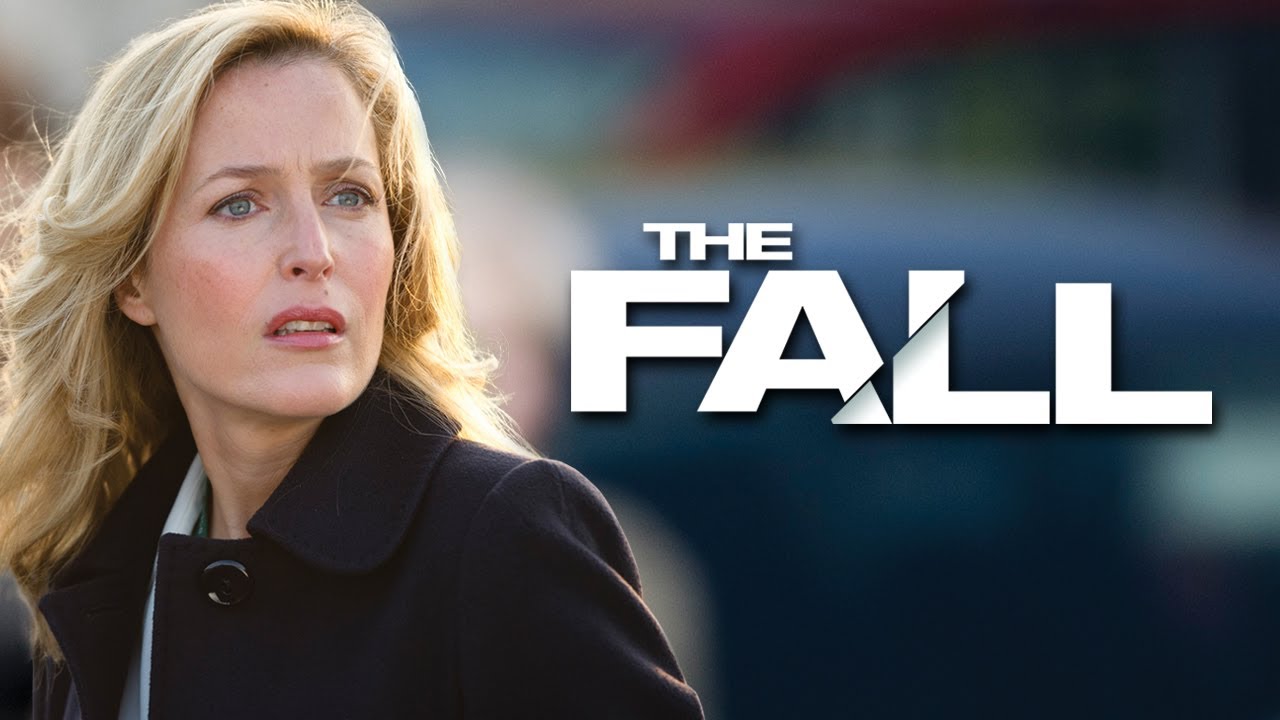
Set in Belfast, The Fall follows the exploits of serial killer Paul Spector (Jamie Dorman), who is murdering young women in the city, and detective Stella Gibson, the head of the investigative team. Other characters revolve around our leads. These include: Katie (Aisling Franciosi), a 15-year-old Lolita-type who attaches herself to Paul, finding the murder of women to be a turn-on; Jim Burns (John Lynch), Stella’s immediate supervisor, who had an affair with her in the past and tries to drunkenly rape her during the series; Ned Callan (Nick Lee) the worst journalist in history; and Jimmy Tyler (Brian Milligan), the cartoonishly abusive husband of Liz (Séainín Brennan), one of Paul’s patients. Yes, patients, because Paul is a social worker/therapist. And extremely clever. And alluring to everyone, including Stella. Remind you of a certain movie and TV serial killer who is far more interesting and engaging?
The series looks good, with attractive cinematography and a subdued color palate with splashes of brightness to emphasize certain scenes and characters. It has a good cast and is well acted. On a technical level it’s a competent, even well-made, series.
The problem; it tells a hackneyed story and populates it with hateful characters. I like a good anti-hero. I like a good villain. However, it is difficult to enjoy a story in which every main character is a monster. Stella and Jim are the most egregious examples of this. While we expect our villain to be horrible – and Paul is – our protagonists are misanthropic, sex-obsessed jerks. Stella is portrayed as equating feminist empowerment with promiscuity (usually sleeping with co-workers), hating all men and, by the end of the series, falling for a serial killer who preys on women. Jim is portrayed as dumb, obsessed with Stella (who people are shown to find attractive, although it is unclear why, given her cold, dismissive personality) and ready to drunkenly rape her. There are, in fact, no sympathetic main characters who are male. At best, men are stupid, needing Stella to guide them. At worst, they are violent stereotypes like Jimmy, whose only purpose seems to be to show how every man is a misogynistic monster, not just the serial killer. He also serves as the deus ex machina in the offensively bad Season 2 finale.
The series doesn’t play gender favorites in presenting horrible characters. Woman are seen as serial killer groupies (Katie), clueless, enablers like Paul’s wife, Sally (Bronagh Waugh) or victims. While the dialogue in the series directly attacks men, the story makes it clear that everyone is horrible. While a few supporting characters are presented in a positive light (e.g., police officer Danielle Ferrington (Niamh McGrady)) the viewer is left with the distinct feeling that they are positive only because they are one-dimensional. Scratch the surface and you’ll find another sexually damaged collection of negative gender stereotypes.
The character problem is compounded by the hackneyed story being told. This is a standard police procedural/serial-killer plot with an abusive husband story-line tacked. The story says nothing original about the genre nor does it present the story it is telling in an original fashion. Compared to series like The Killing (which it closely resembles) and Hannibal, both of which feature damaged and conflicted characters as protagonists, but do so in the context of compelling storytelling, The Fall is an example of lazy, cliche-filled writing. The plot relies on dumb protagonists, a preternaturally smart and lucky antagonist and coincidence after coincidence to propel it forward. The Season 2 finale in particular relies on the latter to a degree that is offensive to the viewer. Jimmy, presumably being followed by every cop in Ireland after threatening his wife and a group of other battered women with a gun, manages to find Paul in the midst of a forest surrounded by cops and shoot him. This seems to be an excuse for the series’ final scene, Stella lovingly cradling Paul, calling for help with compassion in her voice, as he bleeds out. It is a dumb scene, that makes our protagonist out to be worse than our antagonist. He is an insane killer; what’s her excuse?A story does not always need a hero; but, it usually needs a character one can identify with. If it does not have this, then it needs to tell an interesting, original story or at least tell the story in an original or engaging fashion. When the story presents characters who are uniformly contemptible and fails to be anything more than tropes and stereotypes, it is not worth watching.
Not recommended.
Saturday, March 14, 2015
Film Review - The Dark Side of the Moon (2002)
We all know that Apollo 11 went to the Moon, right? Or did it? Well, yes, it did; however, the idea of a Moon-landing conspiracy makes for an interesting movie premise. Director William Karel’s The Dark Side of the Moon is a mockumentary that combines archive footage, edited interview footage with men like Henry Kissinger and Don Rumsfeld taken from an earlier, unrelated documentary Karel made about the Us national security policy, as well as fictional characters portrayed by actors. This blend makes for fun and engaging film.
The movie starts with an actual event. Stanley Kubrick, when shooting Barry Lyndon, used one of a handful of Zeiss lens originally designed for NASA to use in the Apollo program. From this kernel of truth, Karel tells an elaborate story in which Richard Nixon, senior members of the US national security community and NASA recruit Kubrick - fresh off the success of 2001: A Space Odyssey - to fake footage of the Moon landing, when what is discovered that there is no usable film from the actual landing. Nixon later, in a drunken stupor, orders the CIA to assassinate the film crew, which results in an army of killers wandering around Southeast Asia. Except for Kubrick, who gets to use the lens.
The film is littered with Easter Eggs, like the fictional people being named after characters from Kubrick and Hitchcock films. There are also a lot of ahistorical bits of information given out to let you know it’s all a joke. For example, Lyndon Johnson is said to have been governor of Texas, an office he never held.
There are some, however, who haven’t gotten the joke. They think this is either an actual documentary or a fictionalized account of a real Moon landing conspiracy. The lengths to which people will contort reality to their bizarre worldview is truly amazing. For more Kubrick-related conspiracy theories by people who believe them, check out Room 237. One of the subjects of that documentary thinks that The Shining was made by Kubrick to tell the world the Moon landing was a hoax.
The Dark Side of the Moon lampoons these ideas and conspiracy theories in general; but, it does so in a very creative way. The use of edited interviews of real people is fits in with how pseudo-science shows (e.g., Ancient Aliens) regularly use out of context or partial comments from real scientist to support their ideas.
The cast of The Dark Side of the Moon does a nice job, fitting in with the very “real-world” tone of the film. And the story builds in a engaging fashion, starting plausibly enough - that NASA turns to Hollywood to make the space program “sexy” - before veering off into lunacy…or, is that Lunar-cy?
This is an exemplary mockumentary. A must see for fans of the style, science fiction movie fans, and conspiracy buffs. Check it out.
Saturday, February 21, 2015
Film Review - Soldier (1998)

After the conclusion of training, we leap to year 38 of the Project. Todd (Kurt Russel) is one of the elite soldiers. He and his fellow troops have been in numerous wars (we get glimpses of the War of the Six Cities, the Moscow Incident, and the Battle of the Argentine Moons (FTL travel exists some time before 2036). How they survive any of them is a bit of a mystery since their tactical acumen seems limited to “walk down the middle of the street firing.” But, hey, it looks bad-ass.
Unfortunately for Todd and his fellow soldiers, there’s something new on the horizon; Colonel Mekum (Jason Isaacs in full-on needless jerk mode) and his genetically engineered, test-tube baby troopers. They prove to be physically superior to the Todd and his comrades. Todd is apparently killed during a fight with one the super-soldiers - Caine 607 (Jason Scott Lee), and his body is dumped with a shipload of garbage on Arcadia 234, a desolate planet used for waste disposal
Todd finds the planet inhabited by a small colony of marooned humans who live off the junk. He attempts to fit in, although it is very difficult due to his training; he knows nothing but war. After he accidentally attacks a colonist, he is exiled; but, when Mekum and his troops arrive and the Colonel decides to eradicate the colony as a training exercise, Todd finds a cause to fight for.
Screenplay writer David Peoples originally conceived of Soldier as a sidequel to Blade Runner. There are a few references to that film sprinkled about, such as a Spinner on the junk planet and Todd having fought at the Tannhauser Gate, which is one of the battles Roy Batty (Rutger Hauer) mentions in Blade Runner. It isn’t hard to see Caine and the other supersoldiers as a variation on the Replicants. And, the story does touch on some of the themes of Blade Runner, namely what is it that makes a person human, can we really get away from our nature as emotional creatures, and is there such a thing as the soul inherent in human consciousness.
While the acting is pretty good, the characters are poorly developed. Colonel Mekum is cartoonishly cruel, to the point of seeing civilians as targets for his troops because he doesn’t want “paperwork.” The soldiers, including our protagonist, have very little dialogue. While Kurt Russell does a serviceable job of trying to show Todd’s inner conflicts, the mostly silent, stoic portrayal - and a third act devoted to action - mean he comes across as shallow.
The film looks good. The designs of Arcadia, the colony cobbled together from civilization’s garbage, and the high tech military hardware are well done (although the APC - see below - would be a missile magnet; there’s a reason we don’t build vehicles the size of barns). Paul Anderson, best known for the Resident Evil films, demonstrates he can tell an interesting visual story, something not evident in his later work. He also works in a visual reference to Event Horizon, his superior film from the previous year.

The film really begins to fall apart in the third act. Instead of continuing to show Todd’s character developing into a full human being, the movie devolves into a pointless orgy of explosions and gunfire. Even though Todd is defending the colonists from Mekum’s soldiers, it is hard to feel good about it. After all, they are following orders and are no more (or less) remorseless killers than he is. And, frankly, Todd’s ability to kill off all of the enemy troops is hard to believe, given how proficient they are supposed to be. It comes across as perfunctory, relying on the enemy being painfully dumb. We know Todd will win, we know they’ll be a showdown between Todd and Caine, we know that Mekum will get his (although, it is from a “planet killer” bomb…so, that’s cool). We’ve seen it all before. Which isn’t a problem in and off itself; but, it is when we’ve seen it done better. Take a look at a movie like Die Hard. We know that Bruce Willis will win; but the story is told in a fun fashion and the action is visually engaging.
With a script that relied less on cliches and more time spent on character development, Soldier would have been a better film. With a third act that didn’t seem so tired, then maybe some of the promising themes could have been further developed. As it is, Soldier is a decent sci-fi/action film, but not as good as it could have been.
Subscribe to:
Posts (Atom)